Main content starts here.
Winners of O-CHA Pioneer Award 2026
Academic Research Award
Excellent academic research related to tea
SATO Yasushi
( Institute of Fruit Tree and Tea Science, National Agriculture and Food Research Organization (NARO)/ Manager of Division of Tea Research )

Contribution to Expanding Japanese Tea Exports by Developing Pest Control System
To be exported, Japanese tea needs to be cultivated and produced based on a pest control calendar that complies with the pesticide residue standards of the country being exported to. Yasushi Sato worked to address this problem early on and has contributed to putting together guidelines such as the “Manual for Japanese Tea Pest Control that Meets Pesticide Residue Standards of the Export Country” and “Guidelines for Creating Pest Control Calendars for Exporting Tea that Meets Pesticide Residue Standards of the Export Country.” He has widely shared guidelines and research outcomes to tea industry stakeholders through publishing them online, holding briefings throughout Japan, and other means. In addition, Sato has promoted the production of exportable Japanese tea, leading to 36.4 billion yen in exports for 2024. His efforts have helped increase exports of Japanese tea and contributed to the growth of its global market share.
Culture and Arts Award
Outstanding achievements in tea culture and arts
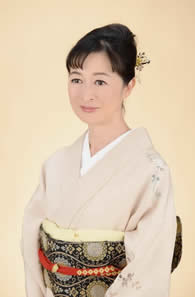
YOSHINO Ako
(Executive Director, Chado Juku)
Research on the History of the Overseas Advertising Strategy of Japanese Tea and Communicating Culture
Ako Yoshino’s book The World Expo and Tea: The History of Japanese “Tea Drinking Diplomacy” that Astonished the World published last year shed light on historical facts that could not be ascertained with only tea industry historical materials and presents findings that overturn generally accepted theories about the origin of Japan-produced black tea. Yoshino also translated and analyzed a chapter in All About Tea that deals with the global history of tea advertising and introduced reports to a wide audience. She also conducts research on vintage tea labels and assists and supervises exhibitions on vintage tea labels at museums. Yoshino is currently working on the Vintage Tea Label Textbook (tentative title). Based on her research and activities in the community, she has also contributed academic papers to the International Anthology Publication Project organized by UC Davis GTI and greatly contributed to communicating Japanese tea culture worldwide.
Industrial Technology Award
Development of excellent technologies and products related to tea production and consumption
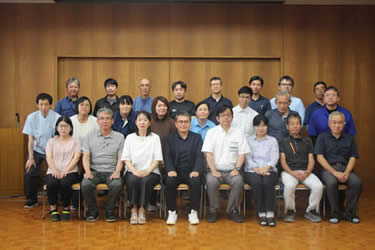
Kagoshima-Osumi Food Technology Development Center
(Derecter / SAKOTA Yasuhiko)
Development of Manufacturing Technology for Freeze-dried Green Tea Made Only with Green Tea
The Kagoshima-Osumi Food Technology Development Center developed manufacturing technology for freeze-dried green tea that reproduces the natural color and appearance of green tea. It uses only green tea and contains no additives, unlike conventional instant green tea that adds powder and molding material. The manufacturing technology provides an easy way to drink delicious tea that tastes like it was made with a teapot. The technology was patented on January 31, 2025. The development and patenting of this technology has greatly contributed to stimulating green tea consumption and to passing down Japanese food culture in the face of the decline of traditional teapot-made sencha culture.
O-CHA Special Award
Excellent global achievements related to tea or the contribution of spreading Japanese tea
Peter F. Goggi
(Tea Association of the USA, Inc. / Former President)
Leadership in the Global Tea Industry and the U.S. Tea Industry
Peter F. Goggi joined Unilever where he worked for over 32 years in its Lipton tea division. He is the first American-born Tea Taster. In 2011, he became president of the Tea Association of the USA, Inc. and the Tea Council of the USA. Goggi has continuously promoted the message of “tea and health” and has led the US tea industry on a growth trajectory. He has also served as the US delegate to the FAO Intergovernmental Group (IGG) on Tea, where he played an important role in obtaining FDA certification for tea as health food. In addition, Goggi has greatly contributed to the Japanese tea industry through efforts such as providing valuable advice to tea industry stakeholders involved in Japanese tea exports at the World Green Tea Conference and assisting research to promote Japanese tea in other countries conducted by the Japanese Tea Export Council.

CHAllenge Award
Ambitious efforts to drive the future of tea
Earth and Sun Association
(President / SUGITA Motoyuki)
Vitalizing Communities by Cultivating Kancha in Abandoned Tea Fields
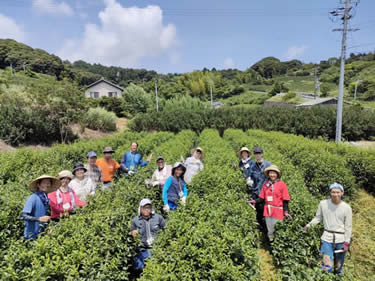
The Earth and Sun Association was launched in April 2017 by tea manufacturers, sellers, and drinkers to revive and maintain traditional Japanese tea, improve communities, and enhance mental and physical health. It borrowed five acres of abandoned tea fields, which it started managing with natural cultivation. In 2019, it began making kancha (winter-harvested tea). The association works to promote itself and kancha by setting up booths at events. It has over 200 LINE followers. It also carries out activities at local elementary schools to encourage students to think about the importance of tea and deepen understanding of the association. The association not only works to address local abandoned tea fields but also engages in tireless and steady efforts to produce kancha year round with participants at Makinohara tea plantations to encourage people to create similar organizations and spread its activities widely.
ROYAL BLUE TEA CHAEN & Yu-Cha FOUNDATION
(Chairman / SATO Setsuo)
Creation of Chaen and Yu-cha—a New Type of Tea Culture—and Establishment of Chaen Coordinator Program
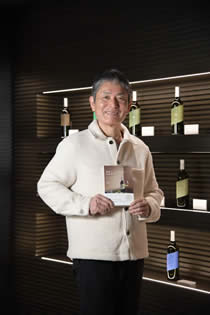
he Royal Blue Tea Chaen & Yu-Cha Foundation was established by Royal Blue Tea Japan Co., Ltd., a manufacturer and seller of high-end tea bottled in wine bottles. Chaen is a marriage between Royal Blue Tea, cuisine, and guests. It represents a “new type of hospitality” from Japan that anyone can enjoy anywhere, at any time, regardless of nationality, religion, gender, age, or tastes. Since April 2022, the foundation has been offering chaen based on the theme of “food + tea + communication” in collaboration with first-class restaurants, hotels, and cultural facilities throughout Japan. The foundation has also established a “Chaen Coordinator” certification program to instill chaen culture into society in a sustainable way. In 2025, it published the Official Chaen Coordinator Guide.
SHOWTIME Inc.
(CEO / MORIKAWA Shota)
Chabacco-Tea Sticks Sold in Vending Machines
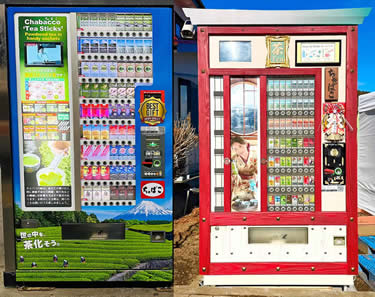
Chabacco is tea powder sticks that “make people smile” created based on the concept “Senonaka wo chakaso” (a phrase meaning “poke fun at the world” that is a play on words with the term for tea). It looks like cigarettes and is sold in vending machines at train stations and shopping centers. Since the packaging differs depending on where the tealeaves are from and the cultivar, it has become a popular souvenir at tea producing areas across Japan. There are also limited edition packages only available in certain regions. The appearance of the packages make people want to buy them and has had a signification impact on promoting tea sales. Chabacco has started being sold in the Philippines and shows promise to expand further in environmentally conscious countries outside Japan.
IIDA Tatsuhiko
(non-fiction writer)
Advocating the Diversity and Potential of Japanese tea and Building Connections between People of Different Tea Producing Regions Through Books
Tatsuhiko Iida has reignited interest in the potential of aroma and fermentation, once significant factors in the appeal of Japanese tea, through authoring a series of books on Japanese tea. From 2009 to 2013, he interviewed tea producers across Japan for articles in the monthly magazine Cha, where he introduced readers to their approach on making tea that emphasizes aroma. Iida has also provided opportunities for growers to build connections with other growers and others who appear in his writings, relationships which continue to this day. He has also often advocated for “withering” in his writings, an important element in a wide range of teas today. Iida’s greatest accomplishments are conveying the diversity and depth of Japanese tea to a wide audience and building connections between people in different tea producing regions through his writings.